Commercial Waste Removal East Ham — Insurance and Safety Standards
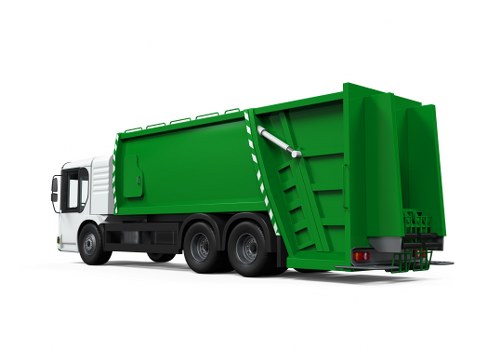 When businesses in East Ham need a reliable, insured rubbish company, safety and clear insurance cover are non-negotiable. Our overview of commercial waste removal East Ham explains why using a fully insured waste removal company ensures continuity of service and protects your business from unexpected liabilities. Public liability insurance is a cornerstone of any reputable commercial waste contractor's offering: it covers third-party injury, property damage and legal costs that could otherwise disrupt operations and harm relationships with clients and neighbours.
All commercial rubbish collection providers operating in urban areas must demonstrate up-to-date cover. A dedicated insured waste contractor will be able to provide policy details and limits, and will apply those standards consistently across every job. Choosing an insured rubbish company also signals that the business invests in staff training, compliant vehicles and professional waste handling procedures — a combination that reduces incidents and creates measurable savings over time.
 Public liability insurance is not the only component: employers’ liability, motor fleet cover and environmental impairment liability are often necessary for complete protection. For commercial waste removal in East Ham, confirming that your chosen insured waste removal company maintains these additional covers gives you peace of mind that contamination risks, vehicle incidents and on-site injuries are addressed. In practice, policies should be reviewed annually and integrated into procurement checks for any firm handling business refuse.
Staff Training and Competency for Safe Waste Handling
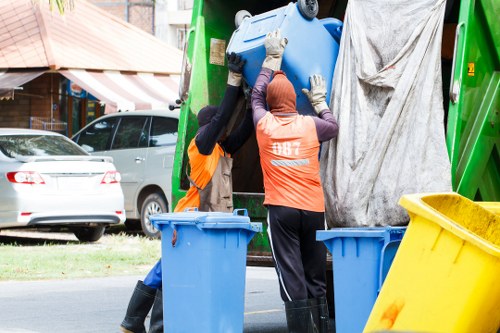 Well-trained teams form the first line of defence against accidents and regulatory breaches. An insured waste management East Ham operator invests in repeated, recorded training sessions covering hazardous materials awareness, manual handling techniques, vehicle securement and site traffic management. Training records should be available for inspection and include evidence of refresher courses. Competency is demonstrated not just by certificates, but by consistent procedures that reduce risk and maintain compliance with local authority expectations.
Staff training programs also cover customer liaison and on-site etiquette to protect your premises and staff from avoidable friction. When a business selects an insured waste removal company, it should ask how often crews are assessed, whether toolbox talks are documented, and how supervisors manage continuous improvement. An organisation serious about safety will have a clear route from frontline observations to formal policy updates.
Practical training links directly to equipment use: drivers and loaders must be competent in vehicle loading limits, weight distribution and secure restraint systems. Regular competency checks and incident reviews form part of a robust safety culture and are frequently required by insurers to maintain favourable premiums and limits for commercial waste removal East Ham operators.
Personal Protective Equipment (PPE) and On-Site Controls
 A reputable insured rubbish company provides and enforces the correct PPE for every task. This includes high-visibility clothing, gloves appropriate to the waste type, safety boots, eye protection and respiratory protection where dust or fumes may be present. PPE alone is not enough: it must be part of documented procedures that include pre-task briefings, site hazard checks and supervision to ensure correct use.
 Risk assessments and method statements must accompany PPE policy. For businesses seeking commercial waste removal East Ham services, look for clear evidence that the contractor prepares a written risk assessment before work begins. A standard risk assessment process evaluates hazards, assigns risk ratings, specifies control measures and assigns responsibilities. For routine collections this might be a standard operating procedure; for one-off clearances or construction sites, the assessment should be bespoke and time specific.
Typical elements of a robust risk assessment process include:
- Identification of hazards (e.g., sharps, asbestos-suspect materials, hazardous liquids)
- Evaluation of who may be harmed and how (workers, members of the public, nearby properties)
- Control measures (segregation, containment, signage, traffic management)
- Monitoring and review procedures, including incident reporting
Beyond paperwork, the best insured waste removal company will demonstrate that risk assessments are used in everyday decision-making: routes are planned to minimise pedestrian interactions, skips are sited with visibility in mind, and lifting plans are agreed before manual handling. Insurance and safety work together: insurers expect risk literacy and will reward contractors that can show consistent reductions in incidents and claims.
Safety governance and compliance also extend to vehicle maintenance, secure load practices and environmental controls to prevent spillages or contamination. An insured commercial waste contractor will have service records, vehicle inspection logs and fuel/condition checklists that tie into overall crew safety responsibilities. This integrated approach is essential for both routine collections and special projects where additional hazards may be present.
Finally, businesses in East Ham should require that any insured rubbish company they appoint demonstrates transparent claims handling and incident investigation practices. When accidents occur, a prompt, well-documented response minimises disruption, addresses remediation quickly and protects your interests. A contractor that manages claims proactively and feeds lessons learned back into training and risk assessment processes is adding long-term value to your waste contract.
In summary, selecting an insured waste removal company for commercial waste removal East Ham means verifying comprehensive public liability and related insurance, confirming thorough staff training and PPE protocols, and insisting on a rigorous risk assessment process. These elements together create a safer working environment, reduce the potential for costly claims and demonstrate professional stewardship of commercial waste.
